Your spa keeps dropping, yet the pool next to it looks perfectly fine. You refill the spa, and a day later the water sits at the same low mark again. That pattern is one of the most common reasons homeowners call us for spa leak detection Bakersfield pool owners can trust.
At Raytek Leak Detection, we see this constantly on pool and spa combos across Bakersfield and Kern County. The culprit is often not the plumbing at all. Instead, it is the spillway or the raised wall that separates the spa from the pool.
Our earlier post on spa water level drops covers valves and plumbing causes. This guide focuses on the structure itself: where it cracks, why it cracks here, and how we fix it.
How a Raised Spa and Spillway Work
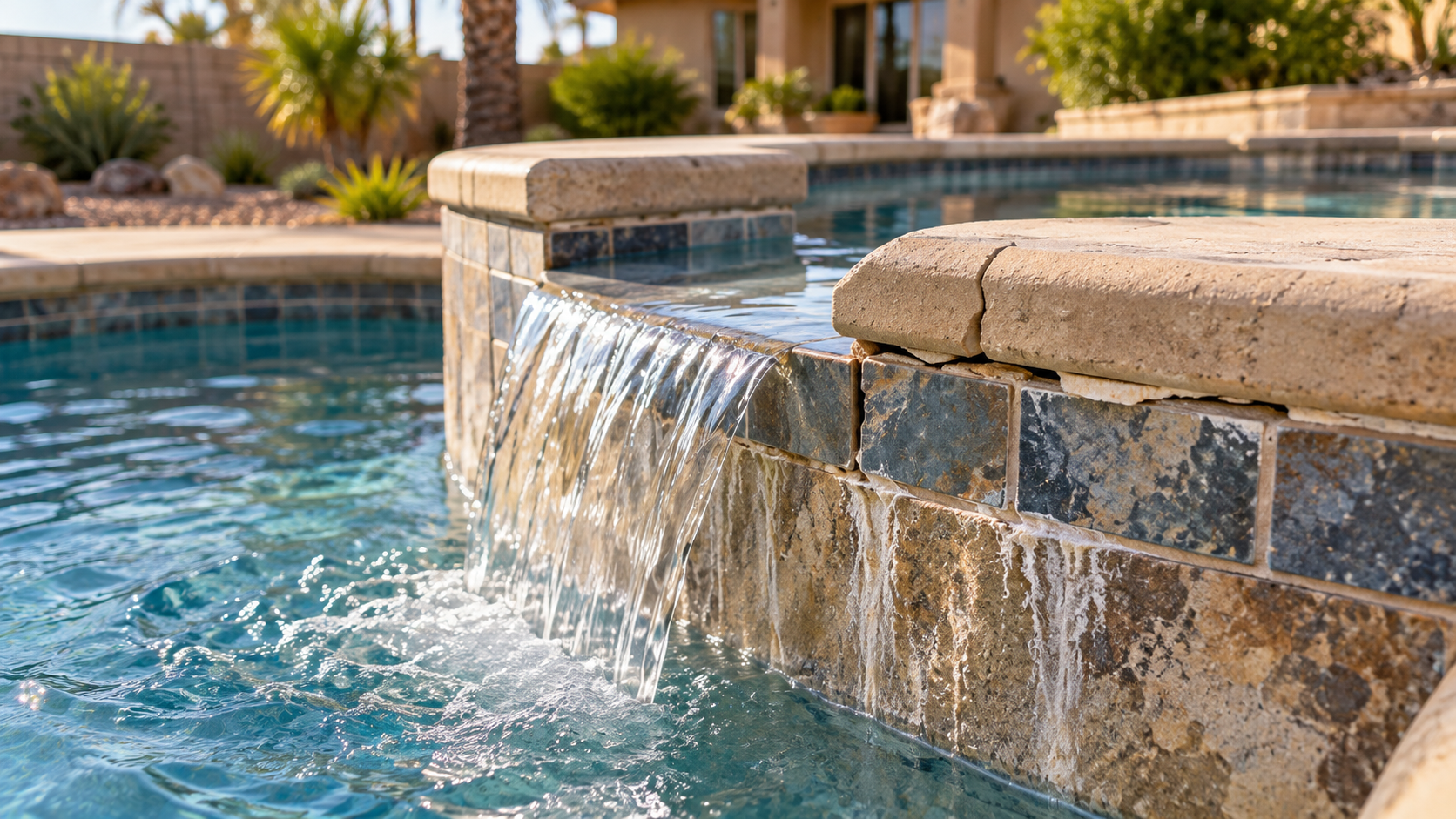
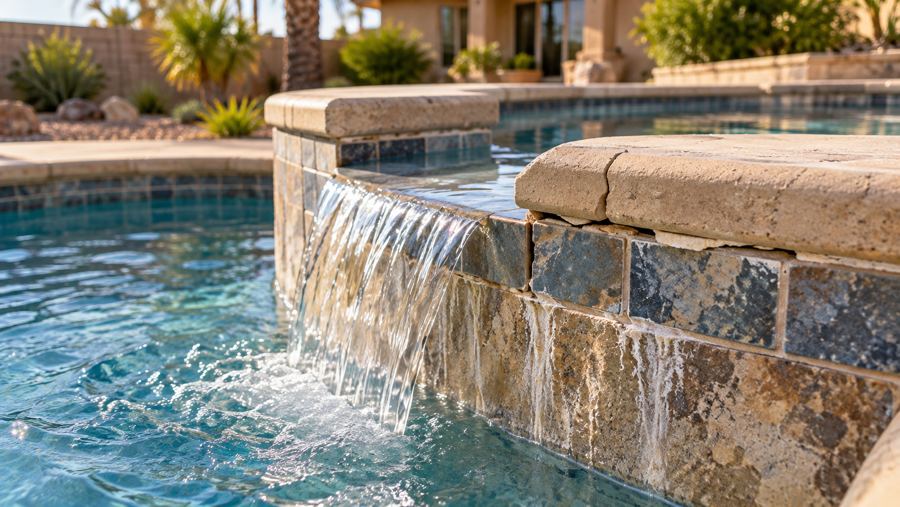
Most attached spas sit higher than the pool. A raised wall, sometimes called a dam wall, holds the spa water above the pool level. The spillway is the lip on top of that wall where water flows over and cascades into the pool.
That design looks great. However, it puts a lot of stress on a small area. The spillway lip and the raised wall carry water on one side, open air on the other, and constant flow across the top.
Because the spa is elevated, any gap in that wall lets water escape downhill. Gravity does the rest, so even a thin crack can drain the spa steadily.
Why Bakersfield Heat Is Hard on Spillways
Bakersfield summers regularly push past 100 degrees, and winter nights can get close to freezing. That wide swing is tough on concrete, plaster, tile, and grout.
Each material expands and contracts at a slightly different rate. As a result, the joints between them take the strain. Over many seasons, hairline fractures form along the spillway tile, the coping, and the top of the wall.
The spa adds another layer of stress. Heated spa water sits on one side of the wall, while the pool side stays cooler. Meanwhile, the back of a raised wall often bakes in direct afternoon sun. Those competing temperatures make the raised wall one of the hardest working pieces of the whole pool.
Signs Your Spillway or Spa Wall Is Leaking
Structural spa leaks tend to leave a recognizable pattern. Watch for these clues:
- The spa drops to the same level every time. It stops at a consistent line, which usually marks the height of the crack.
- The pool level barely changes. Spa water may be draining into the pool, so the total system looks stable.
- Loose, cracked, or missing spillway tile. Grout that crumbles under a fingernail is a common warning sign.
- Damp deck or stained stone behind the spa. If the wall faces outward, water may be exiting the system entirely.
- Calcium streaks on the outside of the raised wall. White crusty lines often trace where water has been seeping through.
- The spa loses water mainly when the pump is off. With no flow pushing water over the spillway, the leak shows itself more clearly.
The Autofill Problem
An automatic fill valve can hide this kind of leak for months. The pool tops itself off, so the water loss never looks dramatic.
Here is something we hear often. A homeowner notices the spa is low only after the water bill spikes. By then, the autofill has been quietly feeding the leak all season. Our post on high water bills and pool leaks explains why that happens.
Where These Leaks Usually Hide
Not every spillway leak sits in an obvious spot. These are the areas we check first:
- The spillway lip. The tile or stone edge where water flows over takes constant wear.
- Grout joints along the spillway. Shrinking grout opens small gaps that are easy to miss.
- The bond line between wall and spa floor. Movement at this joint can open a seam below the waterline.
- The back of the raised wall. Cracks here send water out of the system instead of into the pool.
- Fittings inside the spa wall. Jets and returns set into the wall can loosen as the structure shifts.
Is It the Structure or the Plumbing?
Plumbing problems and structural problems can look similar from the deck. For example, a faulty valve can also make a spa drain down into the pool.
That is why guessing is expensive. Replacing a valve will not stop a cracked spillway, and resealing tile will not fix a bad line. Accurate detection saves you from paying for the wrong repair.
How Raytek Finds Spa Spillway Leaks
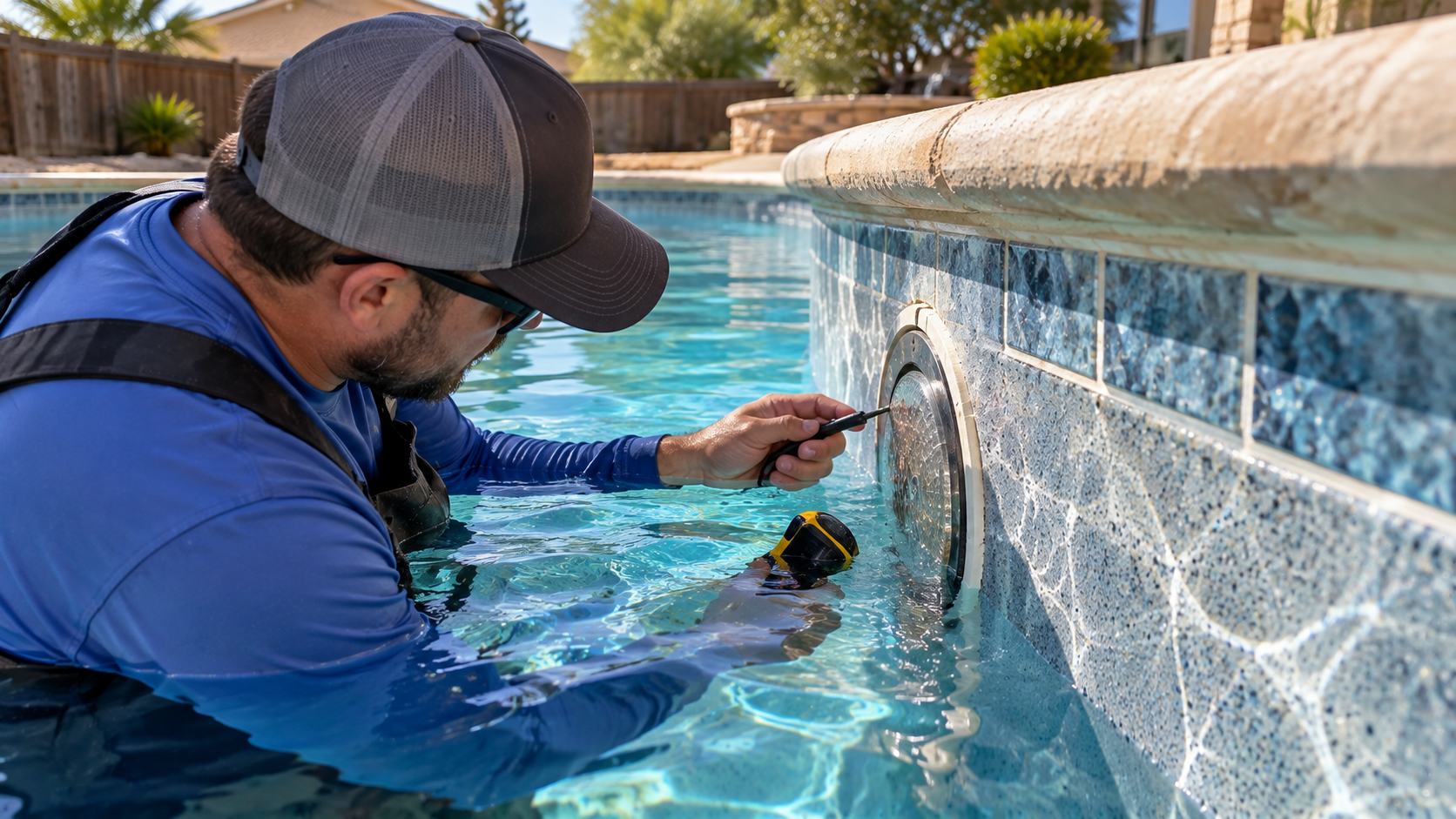
Our spa leak detection process is non invasive. We pinpoint the source first, so repairs target only the exact spot.
A typical inspection includes these steps:
- Isolating the spa. With the pump off, we watch where the spa level settles and compare it to the pool.
- Dye testing. We release tracing dye along the spillway, grout lines, and wall seams to watch where water pulls in.
- Acoustic listening. Underwater microphones help us hear water escaping through cracks or fittings.
- Pressure testing. We test the spa lines separately to rule plumbing in or out.
Most homeowners are surprised by how small the problem looks. A crack thinner than a credit card can still drain a spa overnight.
How Spillway and Raised Spa Leaks Get Repaired
The right repair depends on what we find. Surface level gaps in grout or tile can often be sealed and reset. Loose spillway tile may need to be removed, cleaned, and set again with fresh grout.
Structural cracks need more than a surface patch. For those, we use Torque Lock staples, which stitch across the crack and hold the shell together. You can read more about that method on our pool crack repair page.
Sealing a structural crack without stabilizing it rarely lasts. The same heat cycles that opened the crack will reopen a simple patch. Stapling addresses the movement, not just the gap.
Can You Fix It Yourself?
A spa safe sealant may slow a small grout leak for a while. However, it will not stop a crack that keeps moving. In addition, patching the wrong spot can make the real leak harder to find later.
If your spa keeps dropping to the same line, professional detection is usually the faster and cheaper path.
Frequently Asked Questions
Why does my spa lose water but my pool stays full?
On a pool and spa combo, a cracked spillway or raised wall often lets spa water drain into the pool. The total amount of water stays about the same, so only the spa looks low. An autofill valve can hide the loss even further.
Can a small spillway crack really leak that much water?
Yes. Because the spa sits higher than the pool, gravity keeps pulling water through even a hairline crack. A gap thinner than a credit card can drain a spa overnight.
How do you find a leak in a spa spillway?
We isolate the spa, watch where the water level settles, and use dye testing along the spillway and wall seams. Underwater listening equipment and pressure tests help separate structural leaks from plumbing leaks. The process is non invasive.
Can a cracked raised spa wall be repaired without tearing it down?
In many cases, yes. Structural cracks can often be stabilized with Torque Lock staples, then sealed and finished. Full demolition is usually only needed when the wall has failed extensively.
Why do spa spillways crack so often in Bakersfield?
Bakersfield has extreme summer heat and cool winter nights. Those swings make tile, grout, and concrete expand and contract at different rates. Over time, the joints along the spillway and wall develop hairline fractures.
Should I turn off my autofill if I suspect a spa leak?
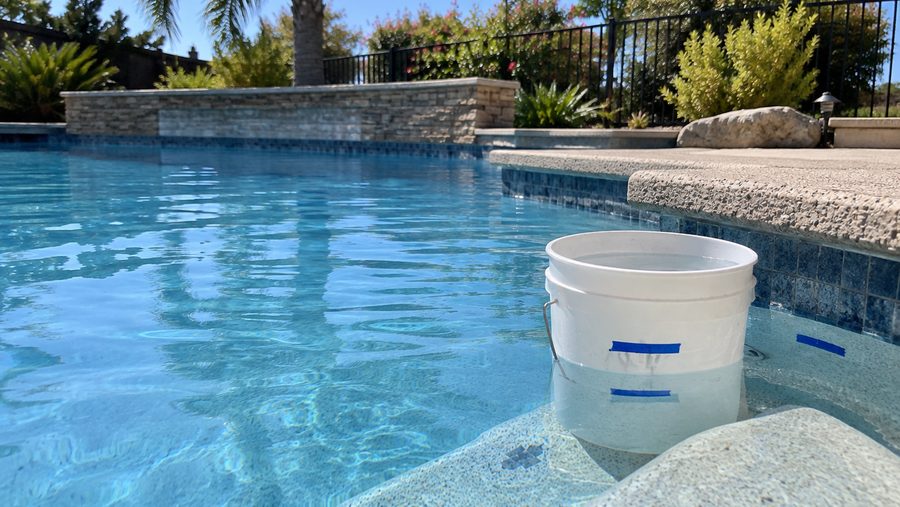
Turning off the autofill for a few days helps you see how much water you are really losing. Mark the spa and pool levels with tape, then check them daily. Share those notes with your technician to speed up detection.
If your spa keeps dropping to the same line, the spillway or raised wall may be the cause. Raytek Leak Detection (Lic #1038868) serves homeowners throughout Bakersfield and the surrounding Kern County communities. Call 888-318-LEAK or book a consultation to get a free estimate and a clear answer about your spa.