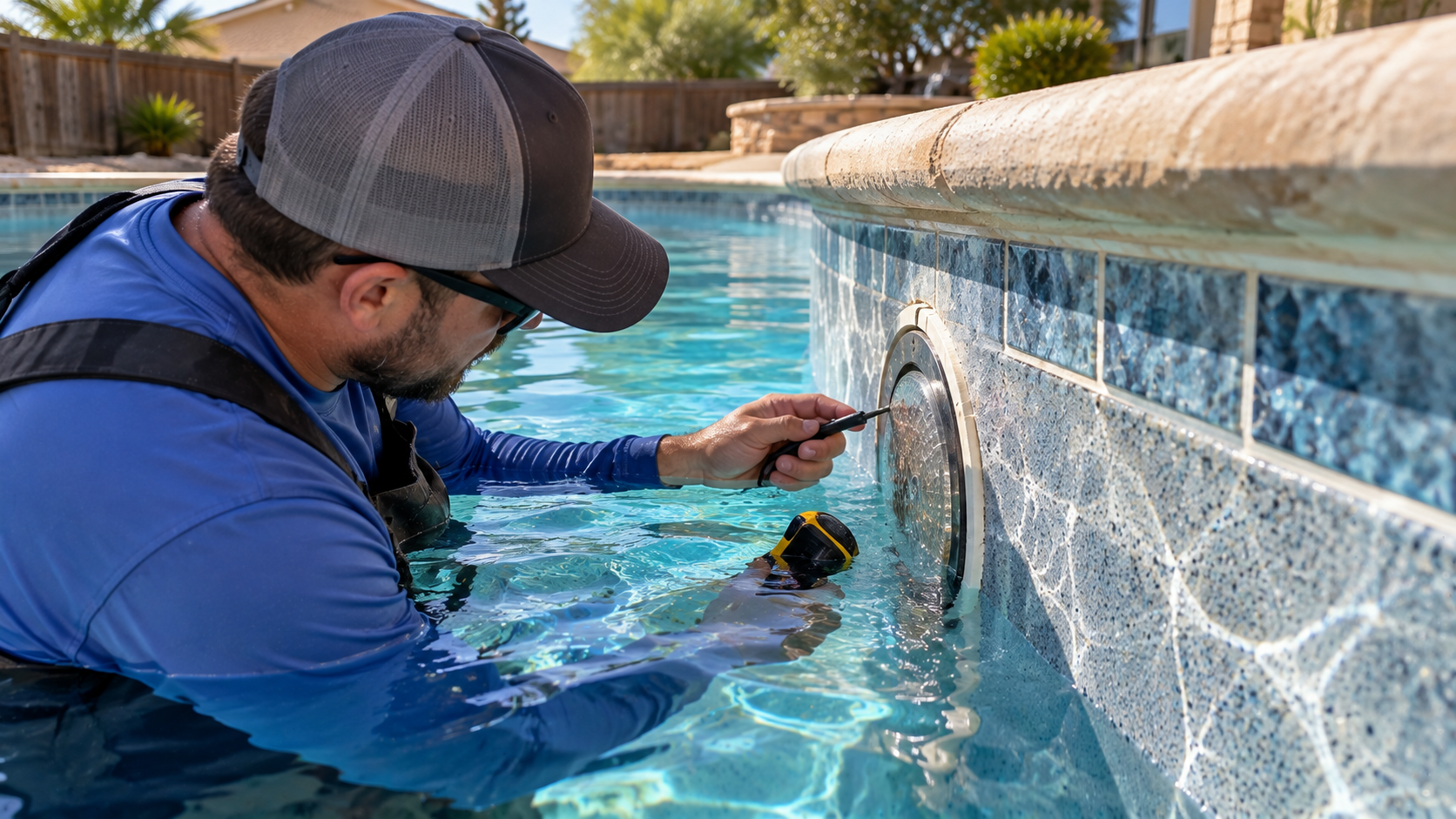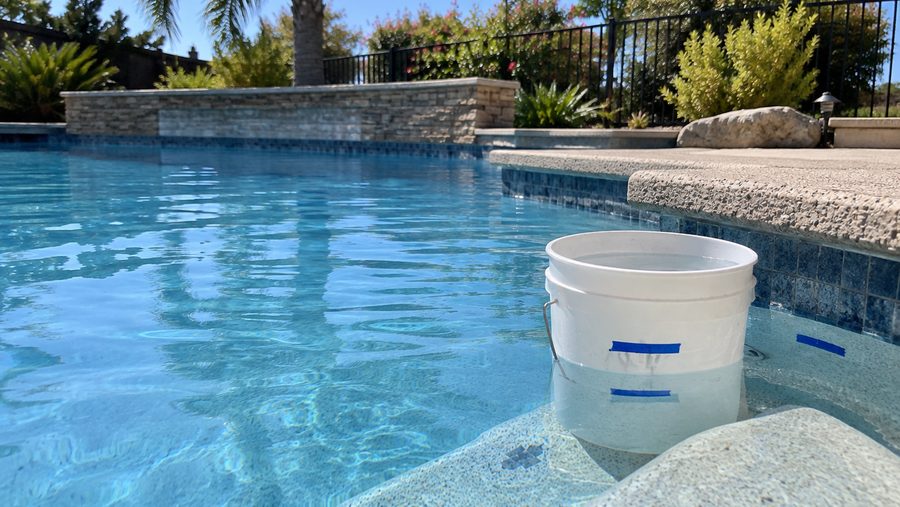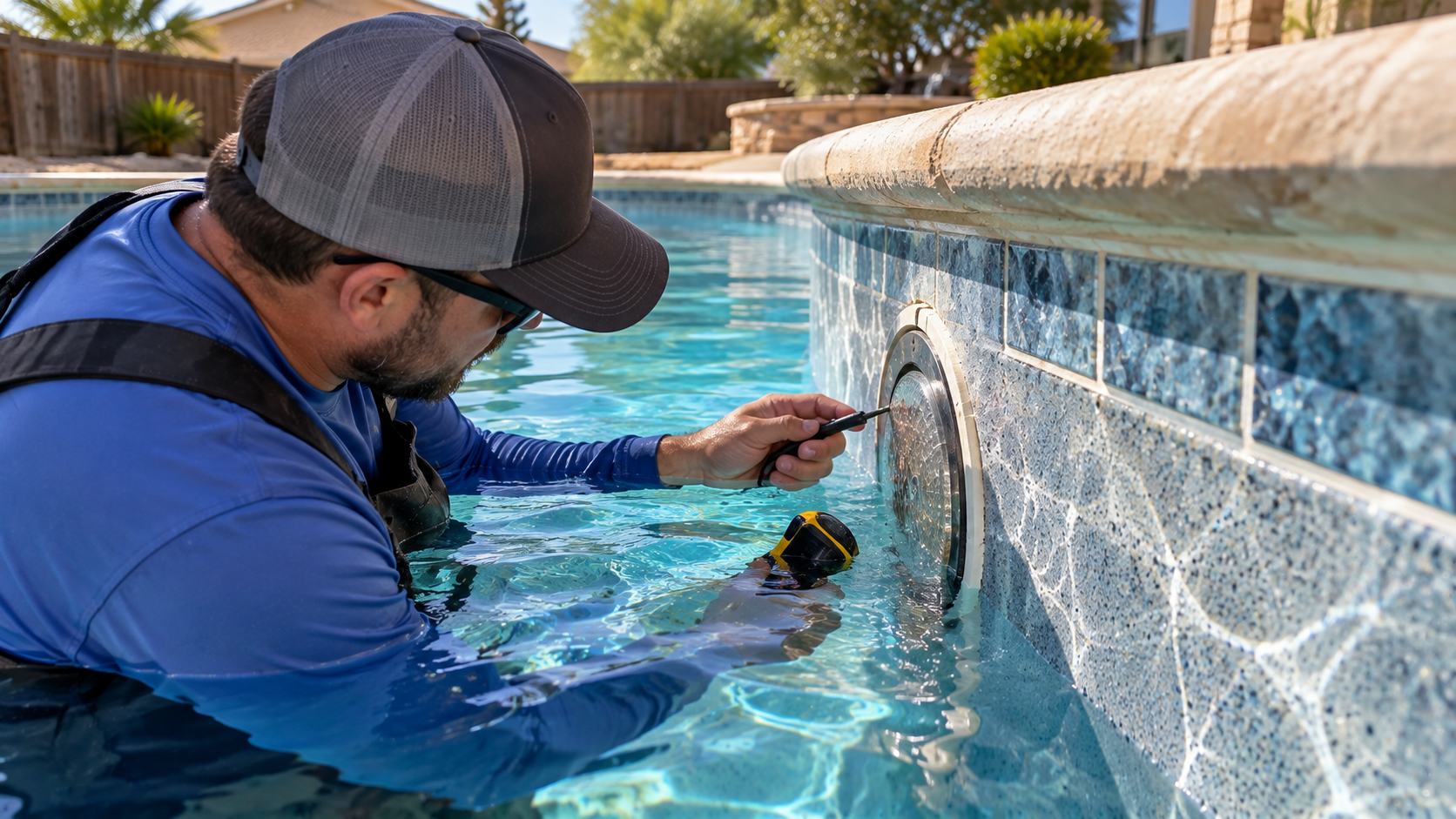
A pool light leak in Bakersfield is one of the sneakiest ways a pool can lose water. The light still works. The water still looks clear. Yet every week, the level creeps down a little further than evaporation can explain.
At Raytek Leak Detection, we find light niche leaks regularly across Bakersfield, Delano, and the rest of Kern County. The light niche is one of the most common leak points in any pool, and one of the most overlooked. Many owners never think to check it.
This guide explains how light niches work, why they leak, what the warning signs look like, and how the problem gets fixed.
How a Pool Light Niche Works
Most in ground pool lights sit inside a recessed housing called a niche. The niche is built into the pool wall, and the light fixture rests inside it. A short length of cord coils behind the fixture so it can be lifted out for service.
The Conduit Connection
That cord runs through a conduit from the back of the niche to a junction box near the deck. In many pools, water is supposed to fill the niche and part of the conduit. The fixture itself is sealed, so the surrounding water doesn't harm it.
The weak points are where the niche and conduit meet the pool shell. If water can escape there, it travels into the ground instead of staying in the pool.
Why Light Niches Leak
Light niche leaks usually come from one of three places.
The Conduit Opening
The spot where the conduit enters the back of the niche is often sealed with putty or a similar material. Over time, that seal can dry out, shrink, or pull loose. Once it fails, pool water can run down the conduit and out into the soil.
Gaps Around the Niche
The niche is set into concrete and plaster. If the bond between the niche and the surrounding shell weakens, a small gap can open around the edge. Even a hairline separation can leak steadily.
Cracked Niches
Some older niches are made of plastic or thin metal. Age, chemicals, and sun exposure can make them brittle or corroded. As a result, cracks can form in the niche itself.
Bakersfield's long, hot summers add to the stress. Heat makes materials expand and contract daily, which can loosen seals faster than in milder climates.
Signs of a Light Niche Leak
Light niche leaks often reveal themselves through one telling pattern. Here is what to watch for.
- The water stops dropping near the light. If you let the level fall and it steadies just below the light, the niche is a prime suspect.
- Water loss beyond a bucket test. The pool loses noticeably more than normal evaporation.
- Damp soil or deck near the junction box. Water traveling through the conduit may surface near that box.
- Debris collecting at the niche edge. Dirt pulling toward a gap can point to water flow.
Here is a detail our technicians notice often. A pool that keeps losing water until it reaches the bottom of the light, then holds steady, is practically pointing at its own leak. The water only escapes while it sits above the faulty seal.
Water Inside the Light vs. Water Leaking Around It
These two problems sound similar, but they're very different.
Water Inside the Fixture
If you see water or fog inside the lens, the fixture's seal has failed. This doesn't usually cause the pool to lose water. However, it is an electrical safety concern. Turn the light off at the breaker and leave the fixture alone until a qualified professional checks it.
Water Leaking Around the Niche
A niche leak, on the other hand, lets pool water escape into the ground. The light may work perfectly the whole time. That's exactly why this type of leak goes unnoticed for so long.
Never pull a pool light out of its niche or handle wiring yourself. Even when a fixture looks fine, electricity and water are a dangerous mix.
How Raytek Finds and Repairs Light Niche Leaks
A light niche leak is usually easy to fix once it's confirmed. The key is confirming it, since several other leak points can produce similar symptoms.
Finding the Leak
First, we check the pool's overall water loss pattern. Then we use dye testing around the niche edge and the conduit opening. If the dye gets pulled into a gap, we've found the source. We also check other common leak points, so you aren't fixing the light while another leak keeps running.
Repairing It
Most light niche leaks are repaired by resealing the conduit opening or the gap around the niche. We use materials designed to bond and cure underwater, so the pool often doesn't need to be drained. Cracked or deteriorated niches may need a more involved repair, which we explain before any work begins.
As a result, a leak that has been draining your pool for months can often be stopped in a single visit.
Pool Light Leak FAQ
Can a pool light cause a leak?
Yes. The light itself is sealed, but the niche that holds it can leak. Water often escapes where the conduit enters the niche or around the niche edge.
How do I know if my pool light is leaking?
A common sign is water that drops until it reaches just below the light and then stops. Damp soil near the junction box and water loss beyond normal evaporation are other clues.
Is water inside my pool light dangerous?
It can be. Water inside the lens means the fixture seal has failed, which is an electrical concern. Turn the light off at the breaker and have a qualified professional inspect it.
Does the pool need to be drained to fix a light niche leak?
Usually not. Most niche leaks can be sealed with materials that cure underwater. A badly damaged niche may require more involved work.
Which areas does Raytek Leak Detection serve?
Raytek Leak Detection serves Bakersfield, Delano, McFarland, and surrounding Kern County communities. Contact the team to confirm service for your address.
Book a Leak Detection Consultation
A light niche leak won't fix itself, and in Bakersfield heat, every lost inch adds up fast. The good news is that this is one of the more straightforward leaks to repair once it's found. Pinpointing the source is what turns months of water loss into a quick fix.
Raytek Leak Detection finds and repairs pool light niche leaks for homeowners across Bakersfield and Kern County. Book a consultation today, and let our team track down where your water is going.