McFarland sits in the heart of the San Joaquin Valley, where summer temperatures regularly exceed 100 degrees and pool ownership is one of the more practical investments a homeowner can make. Keeping that investment in working order means staying ahead of the problems that affect pools in this climate, and water loss is one of the most common. Raytek Leak Detection serves McFarland and surrounding Kern County communities with professional pool leak detection and repair, and this guide covers what local homeowners need to know before a slow leak becomes a bigger problem.
Why McFarland Pools Are Prone to Leaks
The San Joaquin Valley's environment creates conditions that accelerate wear on pool structures and plumbing in ways that are specific to this region.
Extreme heat and temperature swings. McFarland summers are intense. Daytime temperatures above 100 degrees are common from June through September, and the temperature difference between a summer afternoon and a winter morning can exceed 60 degrees within the same 24-hour period at certain times of year. Pool plaster, gunite, and fittings all expand and contract with temperature changes, and repeated cycling over years creates micro-cracks in the shell and stresses connection points where plumbing meets the pool structure.
High evaporation rates. The Valley's low humidity and intense sun mean pool water evaporates faster here than in most other parts of California. A McFarland pool can lose a quarter inch of water per day to evaporation in peak summer. That high baseline makes it genuinely difficult to tell at a glance whether your pool is losing water to the heat or to a leak, which is why many slow leaks go undetected for months.
Soil conditions. Much of the San Joaquin Valley sits on clay-heavy agricultural soils that expand when wet and contract during the dry season. The seasonal moisture cycle that drives farming in the region also moves the ground around buried pool plumbing. Over time, that soil movement stresses underground plumbing at joints and transitions and can open gaps that allow water to escape slowly.
Hard water. Kern County's water supply is high in calcium and magnesium, which causes scale to build up on fittings, inside plumbing lines, and on pool surfaces over time. Scale accumulation at fitting connections can contribute to joint failures and slow leaks that develop gradually.
Pool age. McFarland and surrounding communities have pools across a wide range of ages, and older pools in particular are reaching the service life of their original fittings, skimmer hardware, and plaster surfaces. A pool built 20 or 25 years ago without any structural assessment is a reasonable candidate for a leak inspection even without obvious symptoms.
Signs Your McFarland Pool Has a Leak
You Are Adding Water More Than Once a Week
In McFarland's summer heat, evaporation is real and measurable. But it has a ceiling. A pool that needs water added more than once a week during normal conditions, or that drops more than a quarter inch per day consistently, is losing water beyond what evaporation alone explains.
The Bucket Test Points to a Leak
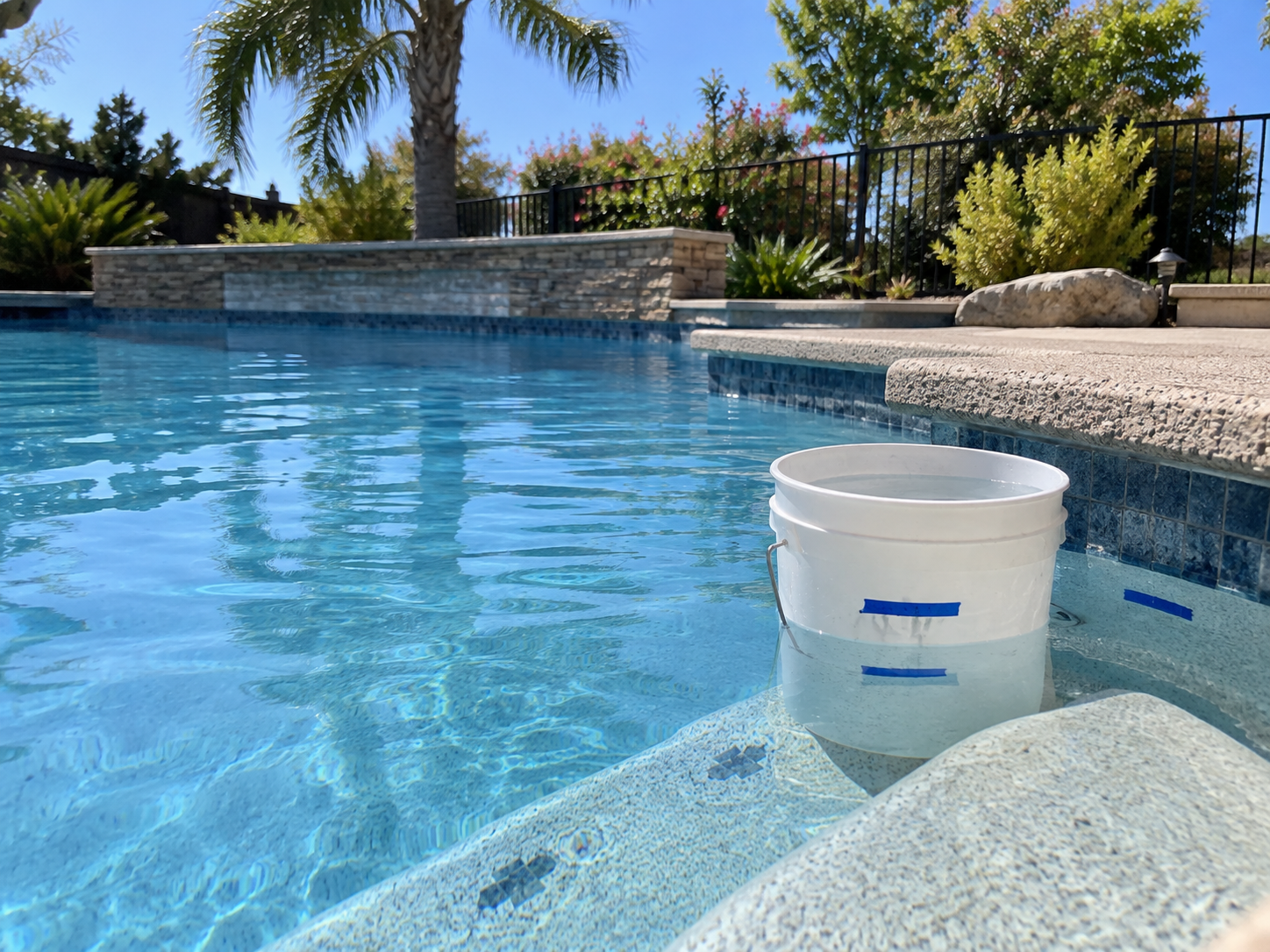
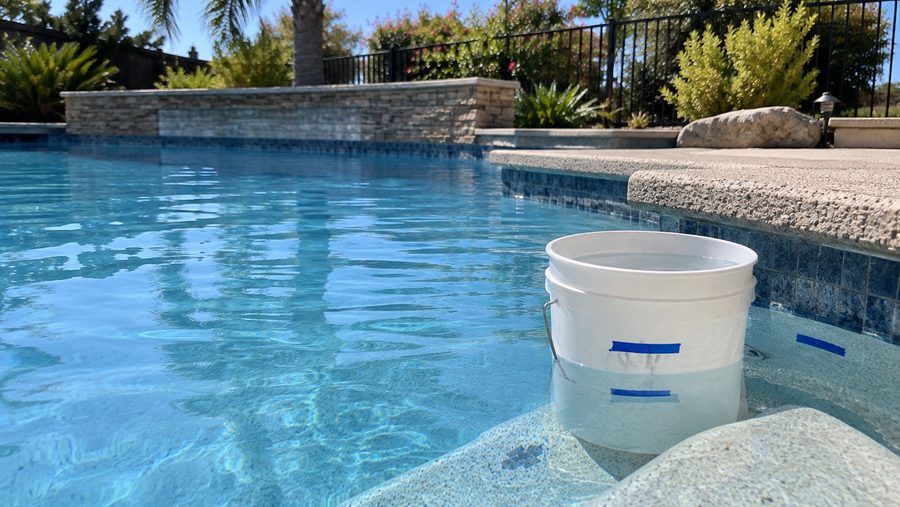
The bucket test separates evaporation from an actual leak without any special equipment. Place a five-gallon bucket of pool water on a step, mark both the pool level and the bucket level, and check both after 24 hours. Both will drop due to evaporation because both are exposed to the same conditions. If the pool dropped more than the bucket, the difference represents water loss beyond evaporation. Turn off the auto fill before running the test so the system is not masking the actual rate of loss.
Water Loss Stabilizes at the Skimmer
If your pool's water level drops and stops falling right at the bottom of the skimmer opening, the skimmer is almost certainly involved. Water is escaping through the skimmer body, the faceplate gasket, or the throat connection to the pool wall, and stops once the level falls below the leak point.
Your Auto Fill Runs Constantly
If your pool has an automatic fill valve and you notice it cycling more often than usual or running for longer periods, it is compensating for water loss. The auto fill cannot distinguish between evaporation and a leak. A consistently active auto fill is an early warning that something is happening beyond normal evaporation.
Air Bubbles in the Return Jets
When a suction-side plumbing line cracks or a fitting loosens, air enters the system alongside water. That air returns through the jets as bubbles. Consistent air in the return jets with a pump that is otherwise running normally often indicates a suction-side plumbing leak worth investigating.
Wet or Damp Ground Near the Equipment Pad
Persistently damp soil near the pump, filter, or plumbing connections without a clear cause like recent irrigation or rain suggests water is escaping underground near the equipment pad. These leaks do not always surface visibly because the San Joaquin Valley's sandy and clay soils drain water quickly.
How Raytek Diagnoses a Pool Leak in McFarland
Guessing at a leak source wastes time and leads to unnecessary repairs. Raytek uses a structured detection process that confirms the source before any repair work begins.
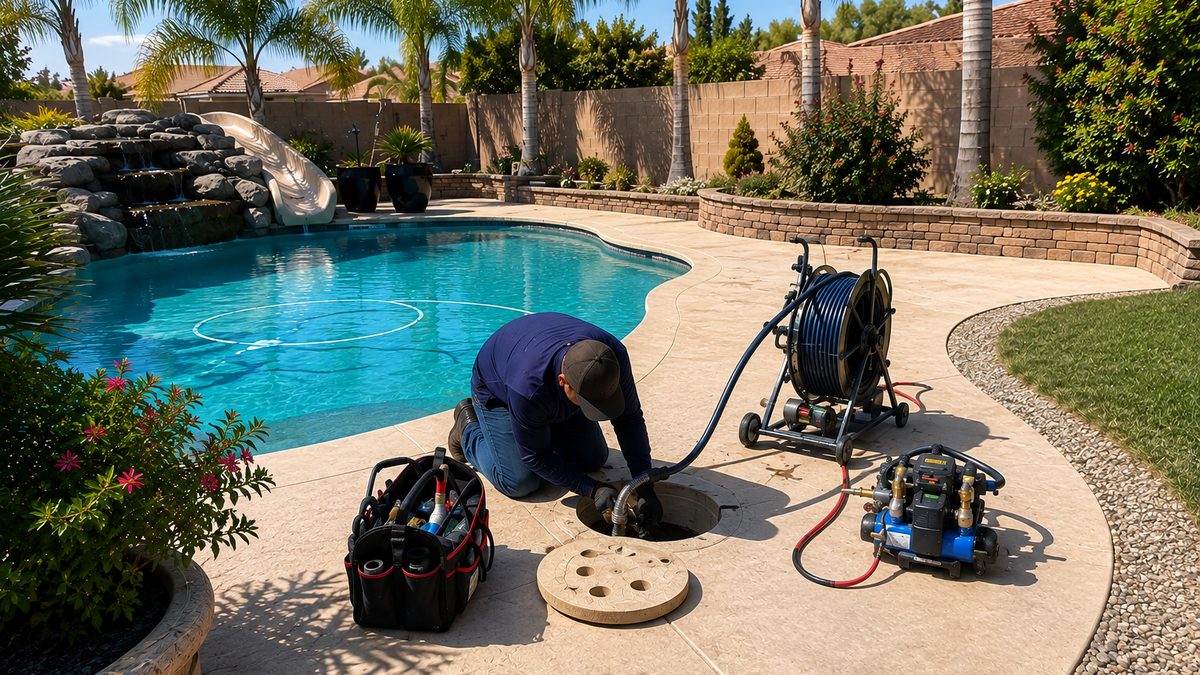
Pressure testing. Each plumbing line is isolated and tested under pressure individually, including the skimmer line, return lines, and main drain. A line that fails to hold pressure has a breach somewhere in its run. This tells us exactly which line is losing water before we narrow down where along the line the problem is.
Dye testing. With the pump off and the water still, dye is introduced near suspected leak points including fittings, the skimmer faceplate, return eyeballs, and light niches. If a leak is present, the dye visibly pulls toward and through the gap. This method is non-invasive and conclusive when done correctly.
LeakTronics acoustic detection. Raytek uses LeakTronics certified equipment that listens for the acoustic signature of water escaping under pressure. This technology locates leaks in underground plumbing lines and pool shell structures that pressure testing and dye work alone cannot pinpoint directly.
Visual inspection. A thorough inspection of the skimmer body, faceplate, light niches, return fittings, and accessible plumbing often identifies cracking, corrosion, or failed gaskets directly. In McFarland's heat, UV degradation on plastic components is a common contributor that a trained eye can identify quickly.
At the end of the detection process you receive a clear picture of what is leaking and where. That information determines the repair.
Common Leak Sources We Find in Kern County Pools
Skimmer faceplate gaskets. The rubber gasket that seals the skimmer faceplate to the pool wall hardens and cracks over time from UV exposure and heat. Once it fails, water escapes at the connection. This is one of the most common and most straightforward repairs we make in the McFarland area.
Return line fittings. The fittings where return lines connect to the pool wall can develop leaks at their threaded connections or at the body-to-shell interface. Dye testing confirms active leak points at these connections quickly.
Underground plumbing line failures. Soil movement in the San Joaquin Valley stresses buried plumbing at joints and transitions over time. When pressure testing reveals a failed line, we assess whether a trenchless repair or a targeted excavation is the right approach.
Pool shell cracks. Fine cracks in gunite or plaster develop over time from temperature cycling and soil movement. Small cracks are sealed and reinforced. Larger structural cracks require more involved assessment.
Light niche leaks. The conduit and fitting around pool light fixtures is a known leak point in older pools. Water escapes through a deteriorated light cord seal or a failed niche fitting.
What Repair Looks Like
Repair approach depends entirely on what detection reveals.
Gasket and fitting replacements handle most skimmer and return fitting leaks. These are typically completed in the same visit without draining the pool.
Crack repairs use materials matched to the pool surface type. Structural cracks are addressed with reinforcement to prevent further movement.
Trenchless pipe repair is Raytek's preferred approach for underground plumbing failures where excavation would be disruptive or costly. Raytek uses Pipe Poxy technology to inject an epoxy liner through the pipe that cures in place and restores full function without digging up your deck or yard.
Torque Lock staple repair is used for structural cracks where the crack needs to be stabilized and reinforced to prevent further movement. Torque Lock staples are the pool industry's leading structural crack repair method and are a core part of Raytek's crack repair process.
Raytek provides upfront pricing before any repair begins. Licensed (#1038868), non-invasive, and backed by professional-grade equipment on every job.
FAQ
How do I know if my McFarland pool is leaking or just losing water to evaporation?
Run the bucket test. Fill a bucket with pool water, place it on a step, mark both levels, and check after 24 hours. If the pool dropped more than the bucket, you have water loss beyond evaporation. In McFarland's summer heat, evaporation is high but it has a ceiling. A consistent difference between the two levels points to a leak.
How quickly can Raytek respond to a McFarland pool leak?
McFarland is within Raytek's regular Kern County service area. Contact us at (661) 319-7740 to check current availability and schedule a detection visit.
Can the leak be repaired without draining the pool?
In most cases yes. Skimmer gasket replacements, fitting repairs, and minor crack work are typically done at or near normal water level. A full drain is rarely necessary unless the repair involves extensive shell work below the waterline.
Does Raytek handle both the detection and the repair?
Yes. Raytek handles the full process from detection through repair. You are not managing two separate contractors or waiting for a second appointment. Licensed (#1038868) and equipped to complete both in one visit when the repair is straightforward.
How much does pool leak detection cost in McFarland?
Detection pricing depends on pool size and system complexity. Raytek provides upfront pricing before any work begins. Call (661) 319-7740 or contact us online for a free estimate.
Suspect a Pool Leak in McFarland? Call Raytek.
Raytek Leak Detection serves McFarland and communities throughout Kern County with LeakTronics-certified pool leak detection and repair. Licensed (#1038868), non-invasive, and fast. Call (661) 319-7740 or contact us online for a free estimate.