You spot a thin, dark line in the plaster near the deep end. Maybe it showed up after a long summer, or maybe you only noticed it once the water cleared in the fall. Before you call anyone about pool crack repair, Bakersfield homeowners should know one thing: not every crack is the same problem.
At Raytek Leak Detection, we inspect cracked pools across Bakersfield and the surrounding Kern County communities. Some of those cracks are only skin deep. Others run straight through the shell and pull water out of the pool day and night. Telling the two apart is the first step, and that answer shapes everything after it.
Two Kinds of Cracks, Two Very Different Problems
A concrete pool is built in layers. The shell is the structural concrete, usually gunite, that holds the water and the weight. On top of that sits the finish, typically plaster, which gives the pool its smooth surface and color.
Where the crack lives matters more than how it looks. A crack in the finish is a surface issue. A crack in the shell is a structural issue, and it usually means water is escaping.
Surface Cracks
Surface cracks stay in the plaster layer. They often look like a fine spiderweb or a scatter of short, shallow lines. Pool pros sometimes call this crazing or check cracking.
These cracks tend to form as plaster cures, ages, or dries out. They can look alarming up close. However, many of them never touch the shell underneath, so they don’t leak.
Shell Cracks
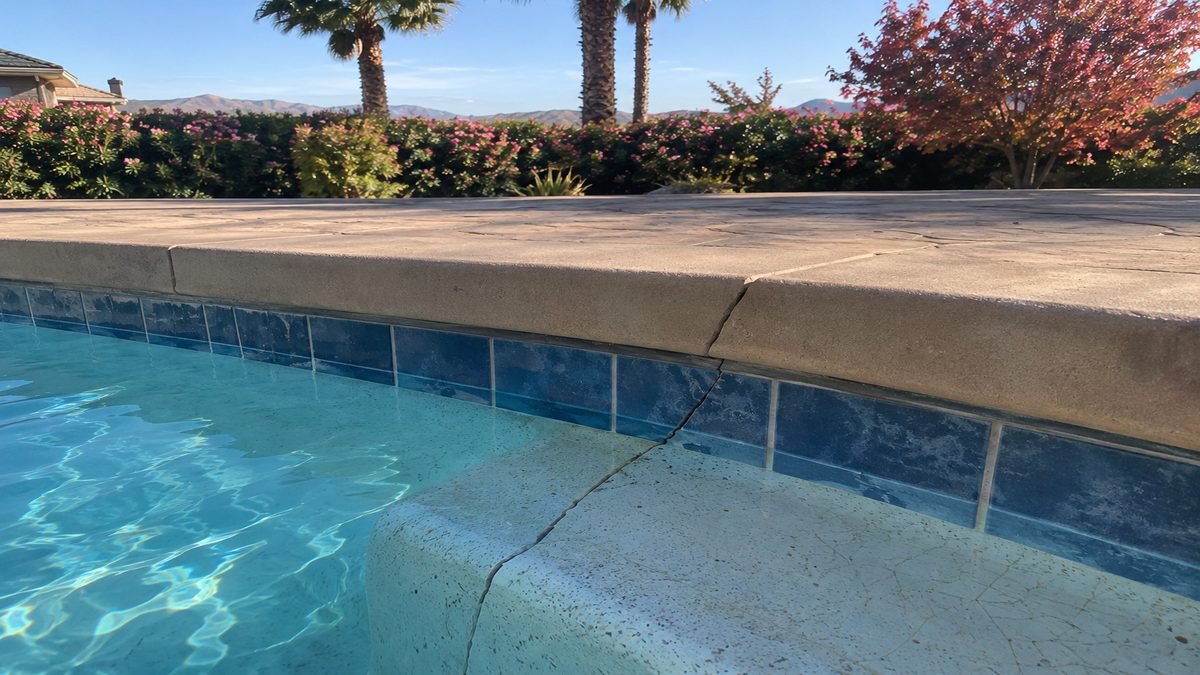
Shell cracks are a different animal. They break through the concrete itself, so they often run in a longer, more defined line. You might see one travel across a step, along a bench, or straight up a wall.
In addition, a shell crack often keeps going past the plaster. It may show up in the tile line, the coping, or even the deck right behind it. When you can follow a crack from the water into the hardscape, the structure is very likely involved.
Why Bakersfield Pools Crack in the First Place
Our climate is hard on concrete. Triple digit summer afternoons bake the deck and the exposed walls, then cooler nights pull everything back in. That constant expansion and contraction stresses every joint and weak spot in a pool.
The ground plays a part too. Soil around Bakersfield shifts as it wets and dries, and a pool shell sits right in the middle of that movement. Over the years, small stresses add up.
Fall and winter bring their own clues. Cooler nights and foggy mornings slow evaporation, so a pool that keeps dropping in November is easier to read than one losing water in July. If your water level falls steadily in cool weather, don’t blame the sun.
How to Tell Which Crack You Have
You can learn a lot before anyone shows up with equipment. Start with these checks:
- Look at the pattern. A web of fine, shallow lines usually points to the finish. A single, longer line with a clear path often points to the shell.
- Follow the crack. If it continues into tile, coping, or decking, treat it as structural until proven otherwise.
- Feel the edges. Surface cracks are usually flush. Shell cracks sometimes have one side slightly higher than the other.
- Watch your water level. Turn off the autofill for a few days and mark the waterline with tape. Steady loss beyond normal evaporation is a red flag.
Our post on high water bills and pool leaks explains how an autofill can hide a leak for months. That hidden loss is one of the biggest reasons cracked pools go unnoticed.
A Common Misconception
Here is something we hear a lot on crack calls: “The crack is right there, so that has to be the leak.” Sometimes it is. Other times, the crack is completely dry and the real loss sits somewhere else.
For example, dye can sit perfectly still at a wall crack, then pull hard into a light niche a few feet away. A visible crack is a suspect, not a confirmed cause.
How Raytek Confirms Whether a Crack Is Leaking
Guessing gets expensive fast. That is why our pool and spa leak detection process confirms the source before any repair begins.
A typical crack inspection includes:
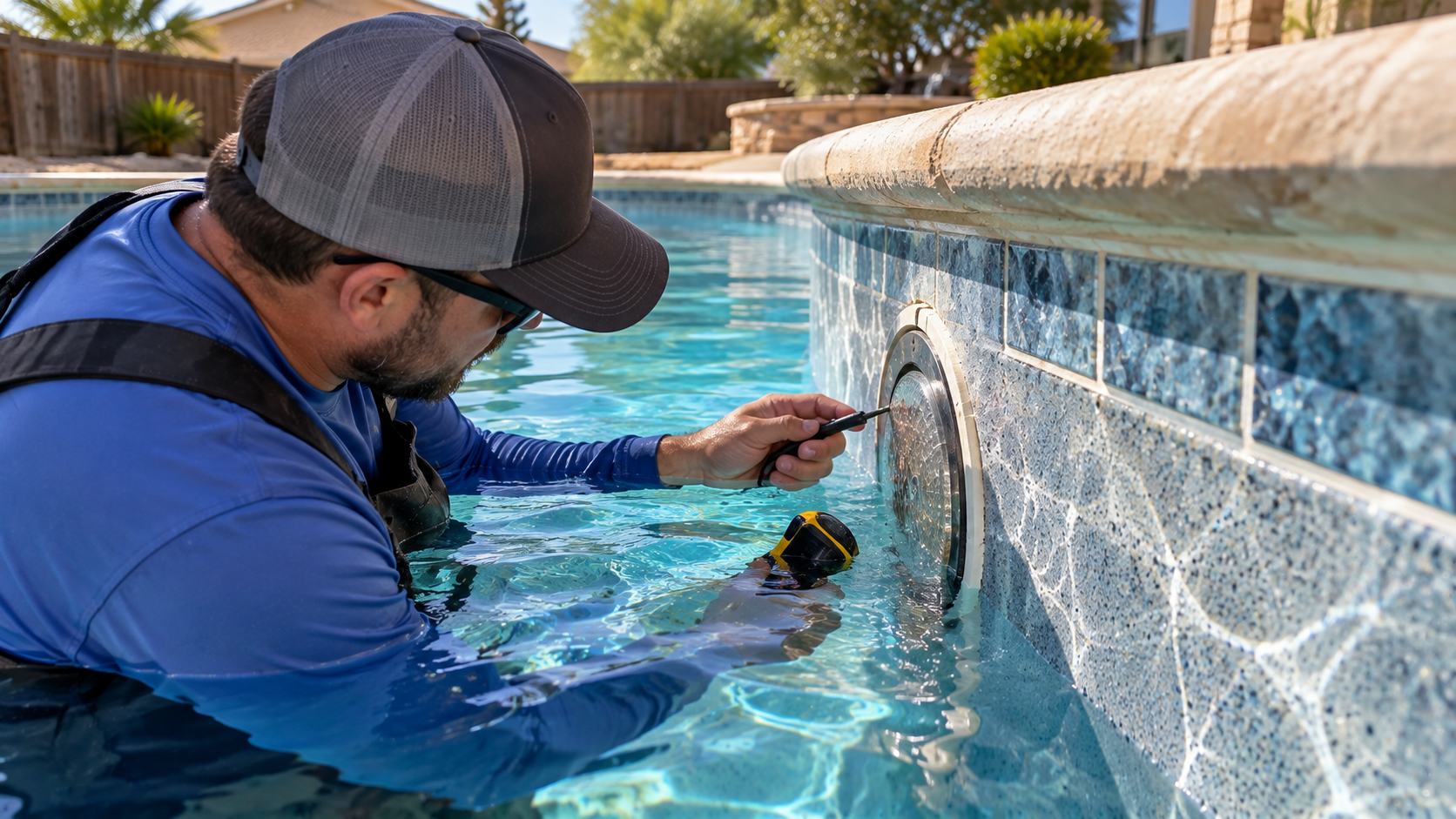
- Dye testing. We release dye right along the crack. If water is escaping, the dye gets pulled in and shows us exactly where.
- Electronic listening. Sensitive listening equipment helps us hear water moving through the shell or the plumbing.
- Pressure testing. We test the lines separately, so a plumbing leak doesn’t get mistaken for a crack leak.
- Inspection cameras. Cameras let us look at areas that are hard to see from the surface.
Owner Darren Gutierrez trained on LeakTronics equipment, and our process is built around finding the leak without unnecessary digging. Because of that, you get a clear answer about the crack and about everything else in the system.
How Shell Cracks Get Repaired
A structural crack needs more than a coat of patch material. Patching only fills the gap. As a result, the same heat and soil movement that opened the crack will usually reopen it.
That is why Raytek repairs structural cracks with Torque Lock structural staples. The staples bridge the crack and lock the two sides of the shell together, so the crack stops moving. Once the structure is stable, the crack is sealed and finished.
Darren trained directly with the founder of LeakTronics, the company behind the Torque Lock method. You can read more about this repair on our pool leak and crack repairs page.
What About Surface Cracks?
A surface crack that isn’t leaking is not a structural emergency. We will tell you that plainly, even if it means there is no crack repair to sell you.
Our job is to find what is actually wrong. If the plaster is aging but the shell is sound, you will know exactly where things stand. Then you can plan any finish work on your own timeline.
Cracks Around Skimmers and Spas
Some cracks show up in predictable places. The area around the skimmer throat is one of them, since that joint carries a lot of stress. Our skimmer replacement page covers what happens when a skimmer itself cracks.
Raised spas are another hot spot. If your spa keeps dropping while the pool stays full, read our guide to spa spillway and raised spa leaks.
Why Waiting on a Shell Crack Costs More
A leaking crack rarely stays the same size. Water escaping through the shell can wash out soil behind it, which leaves the concrete with less support. Then the crack has more room to grow.
Meanwhile, the autofill keeps topping off the pool. Your water bill climbs, your chemicals wash away with the lost water, and the problem stays hidden. The sooner a shell crack is confirmed and stabilized, the simpler the fix tends to be.
Late fall is a smart time to look closely. The pool sees less use, the water level is easier to read, and any repair can wrap up well before swim season.
Frequently Asked Questions
How do I know if a crack in my pool is structural?
Structural cracks usually run in a defined line and may continue into tile, coping, or the deck. Surface cracks tend to look like a fine web of shallow lines in the plaster. A dye test at the crack is the most reliable way to confirm whether water is escaping through it.
Do surface cracks in pool plaster leak?
Many surface cracks stay in the plaster layer and never reach the shell, so they don’t leak. However, a crack that looks minor can sometimes hide a deeper problem. Professional leak detection confirms whether the crack is pulling water before you spend money on repairs.
How does Raytek repair a structural pool crack?
Raytek stabilizes structural cracks with Torque Lock structural staples, which bridge the crack and hold both sides of the shell together. After the crack is stabilized, it is sealed and finished. This addresses the movement that caused the crack, not just the visible gap.
Why do pools crack in Bakersfield?
Bakersfield’s hot summers and cooler nights make concrete expand and contract over and over. Soil movement around the pool adds more stress. Together, these forces can open cracks in the finish, the shell, or both.
Could my pool be leaking somewhere other than the crack?
Yes. A visible crack can be completely dry while the real leak sits at a light niche, skimmer, fitting, or plumbing line. That is why Raytek tests the whole system instead of assuming the crack is the cause.
If you have spotted a crack and your water level keeps dropping, get a clear answer before it grows. Raytek Leak Detection (Lic #1038868) serves homeowners throughout Bakersfield and nearby Kern County communities. Call (661) 369-6558 or book a consultation to find out which kind of crack you are dealing with.