The word "excavation" scares most Bakersfield pool owners more than the leak itself. Nobody wants to picture their backyard torn up, decking demolished, and landscaping destroyed just to fix a plumbing line buried a few feet underground.
Raytek Leak Detection uses trenchless pipe repair specifically to avoid that outcome. Instead of digging a trench along the entire length of a damaged pipe, we access it through small, targeted points and repair it from the inside. For Bakersfield homeowners who've already invested in their pool deck and yard, that difference matters.
What Trenchless Pipe Repair Actually Is
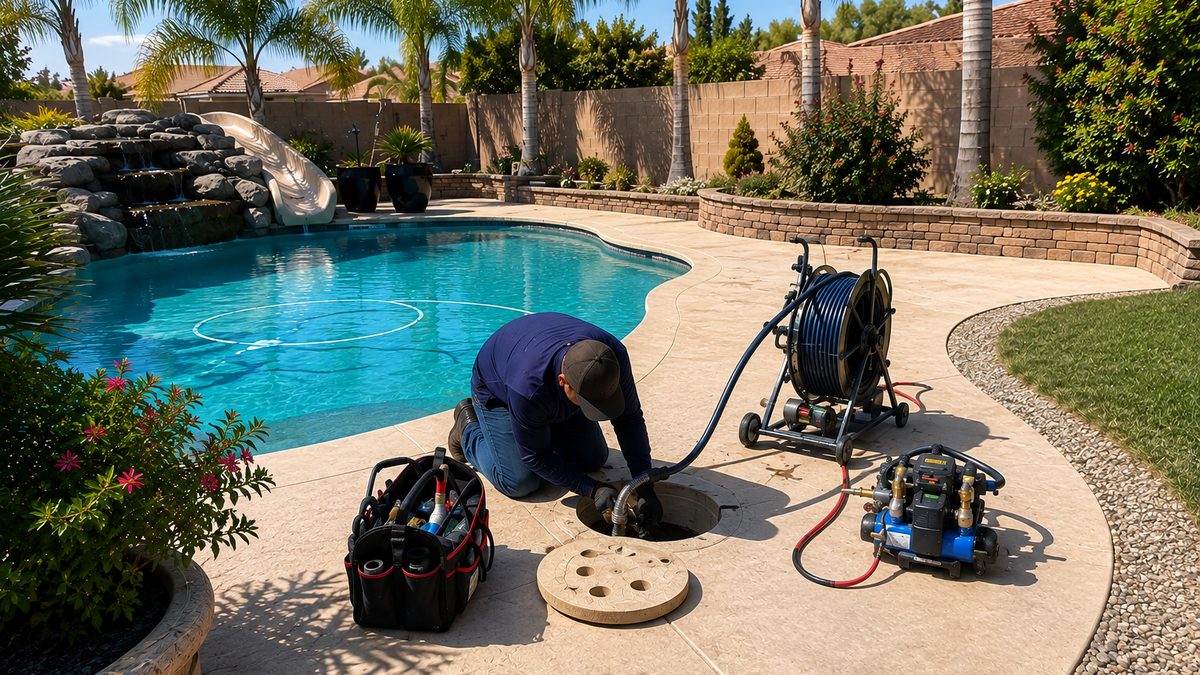
Trenchless pipe repair, also called no-dig pipe repair, is a method for fixing underground pipes without excavating the ground above them. Rather than digging up the entire pipe run, we access it at one or two small points and repair the damaged section from inside the line.
This approach relies on precise leak detection first. We can't repair a pipe trenchlessly if we don't know exactly where the damage is, which is why our process always starts with acoustic detection, pressure testing, and dye verification before any repair work begins.
Why Traditional Excavation Is a Last Resort, Not a First Step
Traditional pipe repair means digging a trench along the entire suspected path of the pipe, sometimes tearing through decking, pavers, or established landscaping to get there. Even when the actual leak is small, the excavation required to reach it can be extensive.
- Deck and paver damage that requires separate repair or replacement after the plumbing work is done
- Landscaping destruction, including mature plants or hardscaping that can't simply be replaced
- Longer project timelines, since excavation, repair, and restoration all add time
- Higher overall cost, when you factor in the excavation and restoration work alongside the actual pipe repair
Trenchless repair sidesteps most of this by accessing the pipe through small points instead of a full trench.
How Our Trenchless Repair Process Works
Here's what the process looks like from start to finish.
- Precise leak detection. Using acoustic equipment, pressure testing, and dye verification, we identify the exact location and extent of the pipe damage before deciding on a repair approach.
- Access point planning. We determine the minimal number of access points needed to reach the damaged section, keeping disruption to your yard and deck as limited as possible.
- Trenchless repair. Depending on the specific damage, this may involve relining the pipe from inside or making a targeted repair at the access point.
- Pressure testing. After the repair, we pressure test the line again to confirm the leak is fully resolved before considering the job complete.
- Minimal restoration. Since we're not dealing with a full trench, restoration is typically limited to the small access points rather than an entire section of yard.
Most trenchless repairs are completed significantly faster than traditional excavation-based repairs, since there's less digging and less restoration work required afterward.
When Trenchless Repair Makes Sense (and When It Doesn't)
Trenchless repair works well for many underground pool plumbing leaks, but it's not the right fit for every situation.
Trenchless repair is a strong fit when:
- The damage is isolated to a specific, identifiable section of pipe
- The pipe material and condition allow for relining or point repair
- Minimizing disruption to decking and landscaping is a priority
Traditional excavation may still be necessary when:
- Pipe damage is extensive or spread across a long section
- The pipe material has degraded to the point that relining isn't structurally sound
- Multiple, unrelated leak points exist along the same line
We'll always tell you honestly which approach fits your specific situation after the detection process, rather than defaulting to one method regardless of what we find.
What This Means for Bakersfield Homeowners
Bakersfield's soil conditions and the intense summer heat both put stress on underground pool plumbing over time, and older neighborhoods in particular tend to have pipe runs that have been in the ground for decades. When a leak develops in one of these lines, the last thing most homeowners want is a construction zone in their backyard for a week or more.
Trenchless repair lets us fix the problem while your pool deck, landscaping, and yard stay largely untouched. For Bakersfield homes where the pool and deck represent a real investment, that's often the deciding factor between a manageable repair and a much bigger project.
Frequently Asked Questions
How do I know if my pool leak is a good candidate for trenchless repair?
The best way to know is through professional leak detection first. Once we've identified the exact location and extent of the damage, we can tell you whether trenchless repair is a good fit or whether traditional excavation is necessary.
Is trenchless pipe repair more expensive than traditional excavation?
Often, trenchless repair costs less overall once you factor in the excavation and restoration work that traditional repair requires. The repair method itself may have a different cost, but you're typically avoiding significant deck, paver, and landscaping restoration expenses.
How long does trenchless pipe repair take?
Most trenchless repairs are completed faster than traditional excavation-based repairs, often within a single visit depending on the extent of the damage and the number of access points needed.
Does trenchless repair work on all types of underground pipe damage?
Not always. It works well for isolated damage in an otherwise sound pipe, but extensive damage or significantly degraded pipe material may still require traditional excavation. We determine this during the detection process.
Will trenchless repair damage my pool deck or landscaping?
Trenchless repair uses small, targeted access points rather than a full trench, so damage to your deck and landscaping is significantly reduced compared to traditional excavation methods.
Do you offer trenchless repair throughout Kern County, or just Bakersfield?
We offer trenchless pipe repair throughout our full Kern County service area, including Delano, McFarland, Arvin, Lamont, Wasco, and Shafter, in addition to Bakersfield.
If you're dealing with an underground pool leak and dreading the thought of a torn-up yard, trenchless repair may be the solution. Call Raytek Leak Detection at 888-318-LEAK to schedule a leak detection assessment in Bakersfield and find out if trenchless repair is right for your pool.