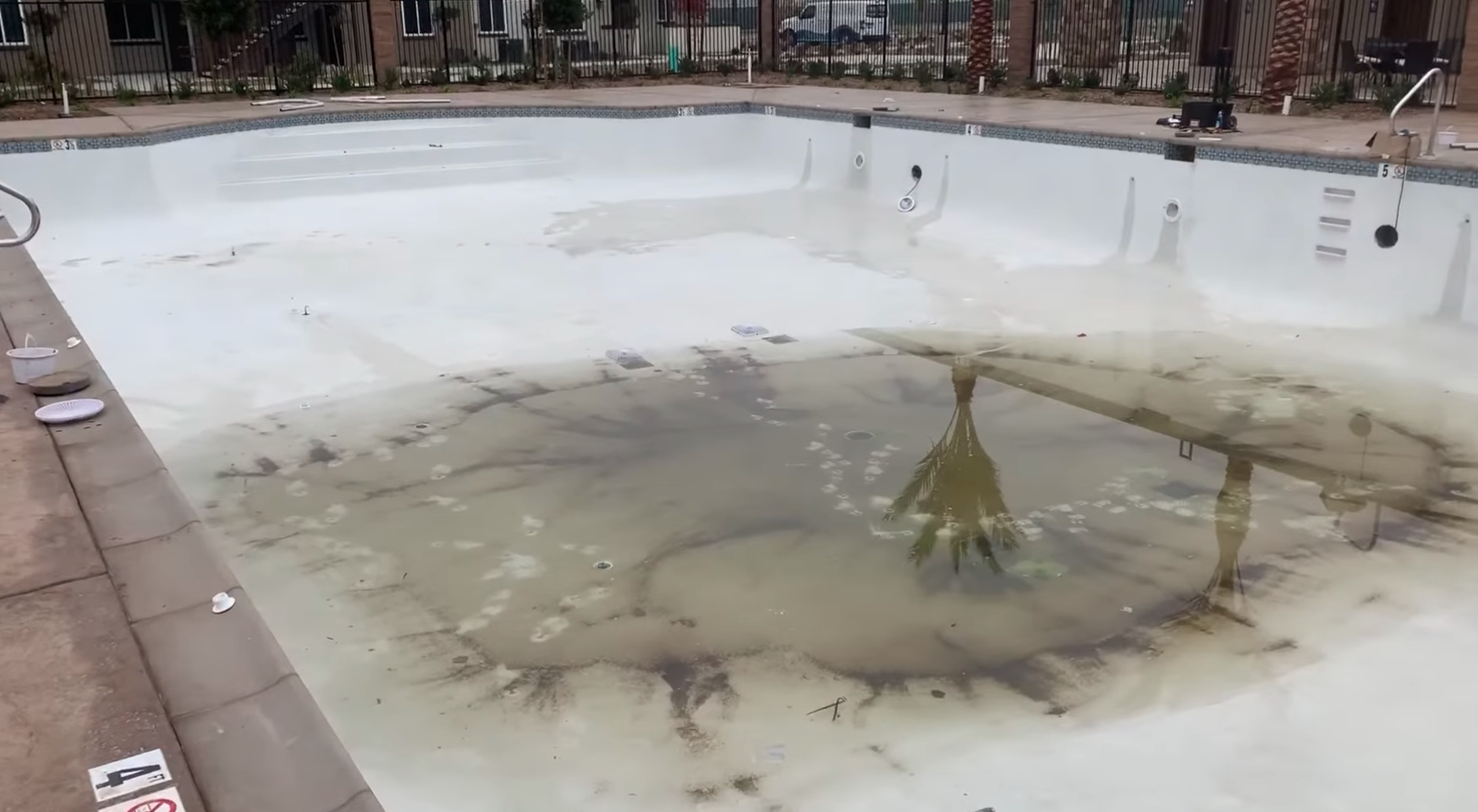
A leaky pool is stressful enough when you can see the problem. But what if the trouble is a pool pipe leak underground, buried beneath concrete, turf, and Kern County clay? Most Bakersfield homeowners picture jackhammers and a torn up backyard. Take a breath. At Raytek, we repair underground pool plumbing leaks without digging in most cases. The fix often takes less than a day.
Here is how to spot the problem, how the pros confirm it, and how modern pipe repair saves your yard.
Signs Your Swimming Pool Is Leaking Underground
The pipes that run your swimming pool are out of sight, so the clues show up elsewhere. Watch for these signs your pool is leaking below ground:
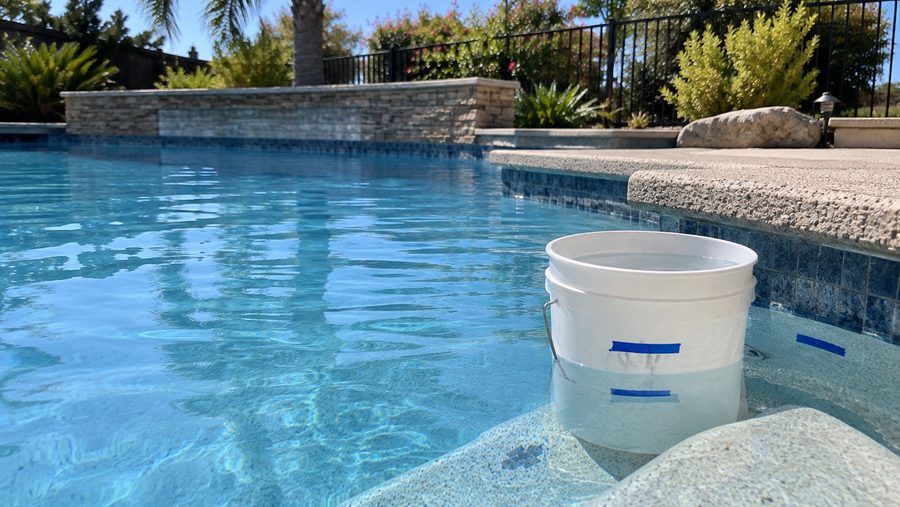
- The water level falls more than a quarter inch per day, even with the pump off
- Soggy spots or extra green grass around your pool that never dry out
- Puddles or wet soil around the pump and equipment pad
- Your pool pump struggles to prime or blows air bubbles from the returns
- Cracks or sinking sections in the pool deck
- You burn through chlorine faster, since fresh fill water dilutes your chemistry
Any one of these can point to pool water escaping underground. Water pushed to the outside of the pipe also washes away the soil that supports your deck. Small problems grow if you wait.
Why Skimmer and Return Line Leaks Are Common in In-Ground Pools
Most in-ground pools in Bakersfield are plumbed with rigid PVC. It is a great material. But decades of soil movement, ground settling, and hot summers take a toll. Joints, fittings, and glue welds give out first. A failed coupling, a cracked elbow, or a separated fitting can leak for months before anyone notices.
The skimmer and main drain lines and the return line are the most common pool plumbing leaks we find. They face pressure swings every single day. An older inground pool with original plumbing is most at risk. Even a newer plumbing system can fail where pipes meet the manifold near the pump.
Suction Side Leaks vs. Pressure Side Leaks
Underground pipes fail on one of two sides of the pump, and each leaves its own fingerprint:
- Suction side leaks sit on the lines that pull water toward the pump. They often suck in air while the pump runs, then let water seep out once it shuts off.
- Pressure side leaks sit on the lines that push water back to the pool. They spray water into the soil while the pump runs, so you lose more water during run hours.
Noting when your water loss happens helps a pool technician narrow the search before any testing starts.
How We Narrow Down the Leak: Pool Leak Detection and Pressure Testing
You cannot fix what you cannot find. And guessing gets costly fast. This is where professionals use specialized equipment instead of shovels.
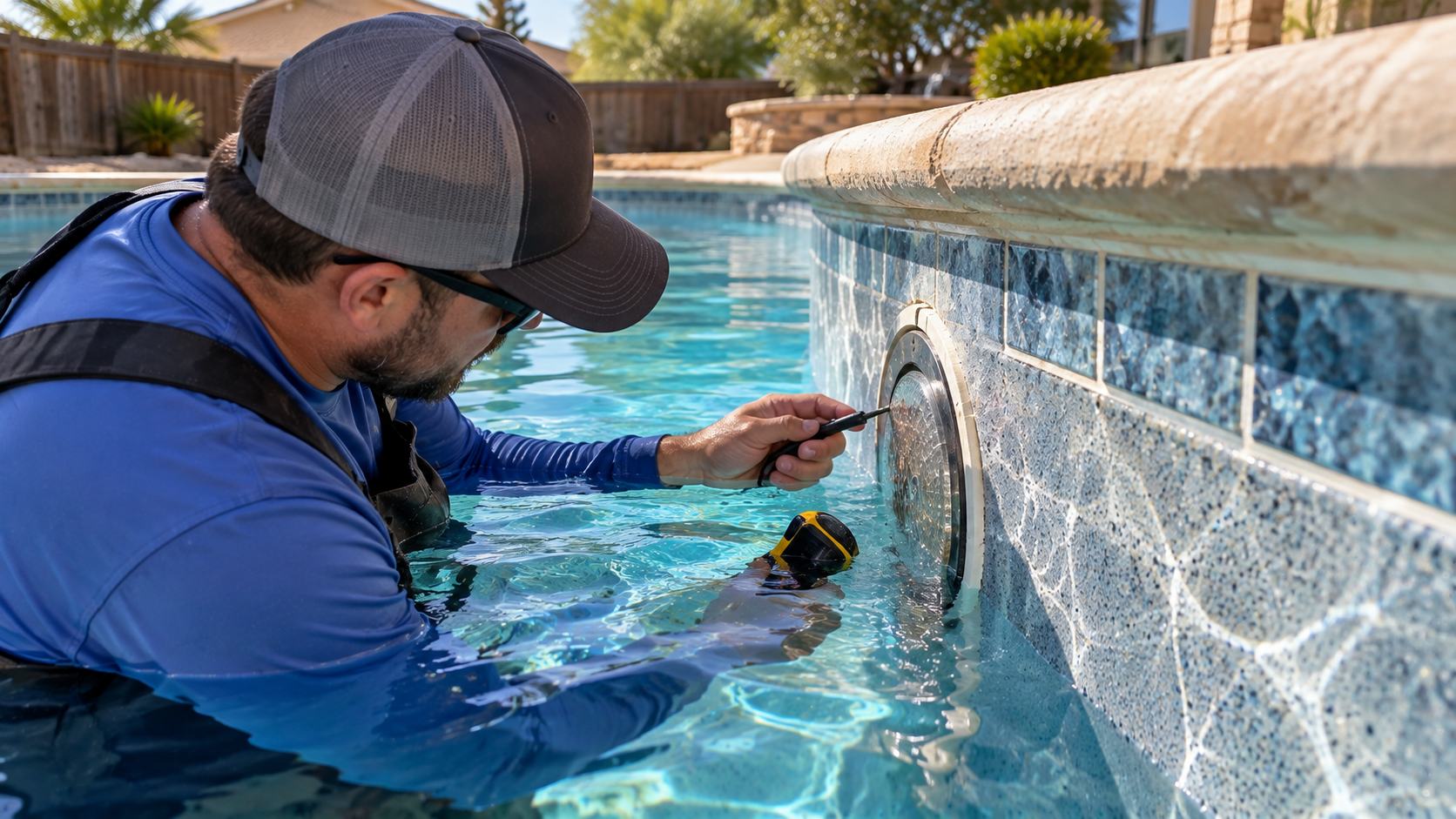
Raytek is certified by LeakTronics. Our pool leak detection process is built to find the leak without tearing anything up. We isolate each line at the valves and run a pressure test. A pressure gauge shows the amount of pressure each line should hold. If the pressure in the line drops, that line has the problem. From there, listening gear and video scopes pinpoint the exact location of the leak, often within a few feet.
The whole leak detection visit usually takes 2 to 3 hours. You get a written report of what we found.
Fix Pool Pipes Without Digging: Trenchless Pipe Repair
Here is the part most pool owners have never heard of. You can now fix pool pipes without digging trenches across your yard. Trenchless technology is a new solution that repairs pipes from the inside. It is far less invasive than old school excavation.
Raytek offers trenchless pipe repair for residential and commercial pools. Pipe relining creates a smooth new liner inside the old pipe. Pipe bursting pulls a new pipe through the path of the failed one.
Pipepoxy: Fixing Pool Pipe Leaks From the Inside
Our favorite tool for fixing pool pipe leaks without digging is Pipepoxy. It is a three part, fast curing epoxy system that repairs or re-coats sections of a leaking pipe from the inside. No cutting. No trenches. Here is how the process works:
- Locate and confirm the leak.
- Purge the pipe with a blower and vacuum.
- Sand the pipe interior and blow out the debris.
- Inject the epoxy and coat the pipe.
- Let it cure, then confirm the repair with an air pressure test.
The epoxy creates a durable new surface inside the existing pipe. It seals the leak and protects against future corrosion. This is a long lasting fix, not a patch.
Why Bakersfield Pool Owners Trust Raytek for Pool Pipe Repair
Raytek is a licensed pool leak detection and pool pipe repair company (Lic #1038868). We serve Bakersfield and nearby Kern County towns. We handle the whole job, from the first test to the final fix. And we show you exactly what we found along the way. Just ask Michael Avalos, a recent customer:
Beyond underground lines, our full pool repair lineup covers structural crack repair with Torque Lock staples, skimmer replacement, and spa and slab leak detection. One call covers it all. A little regular pool maintenance after the fix keeps things that way.
Start Your Pool Plumbing Repair Today
If you suspect a pool pipe leak underground, do not wait for the deck to crack or the next bill to spike. We will find it, show it to you, and fix the leak without digging whenever the job allows.
Call Raytek at 888-318-LEAK for a free estimate on pool plumbing repair. We proudly serve Bakersfield, Delano, McFarland, Arvin, Lamont, Wasco, Shafter, and the surrounding areas.
Raytek Pool Leak Detection & Repair | 13061 Rosedale Hwy Suite G-355, Bakersfield, CA 93314 | www.raytekleakdetect.com