The pump shuts down for the night. By morning, the water has dropped an inch. Sound familiar? A pool losing water overnight, or only when the system is idle, is one of the most common calls we get at Raytek in Bakersfield. The good news is that this pattern is a clue. It points right at the type of leak you have, and that makes it faster to fix.
Here is how to read the clue, test it yourself, and know when to call a pro.
Every Pool Loses Water Overnight to Evaporation
First, some peace of mind. All pools lose a little water, even healthy ones. In Bakersfield, our dry air and triple digit summers make pools evaporate faster than in most of California.
A normal backyard pool here loses about a quarter inch of water per day. Hot, windy days can push that toward half an inch, and you lose more water at night than you might think, since the water stays warm while the air cools. That gap speeds up evaporation after dark.
So some water leaves the pool overnight no matter what. A small drop can be normal. But if you are losing one or more inches of water overnight, that is not the weather. You probably have a leak.
Prove Your Pool Is Losing Water: The Bucket Test
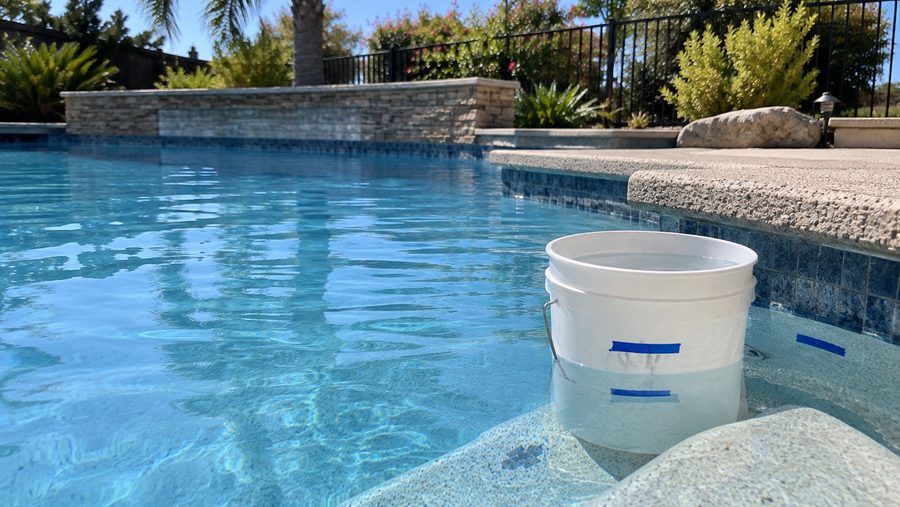
The bucket test is the easiest way to separate evaporation from a real problem. It costs nothing and takes one day:
- Fill a bucket with water and set it on the top step.
- Match the level inside the bucket to the pool level outside it.
- Mark both levels with tape or a grease pencil.
- Turn off the pump and the autofill, and skip swimming for 24 hours.
- Compare the marks.
Loss due to evaporation affects the bucket and the pool the same way, so both marks should drop evenly. If the water level in your pool falls faster than the bucket, the drop is not due to evaporation. Your pool is leaking.
For a sharper answer, run the test twice. Do it once with the pump off, then again with the pump running. Write down both results, because that pattern is about to matter.
Losing Water Only When the Pump Is Off? Here Is Why
Your pool pump system has two halves. One side pulls water in through the pool skimmer and main drain. The pressure side pushes it back out through the return line and any water features. Each half fails in its own way, and each type of leak leaves a different trail:
So if your overnight water loss happens while the system sits idle, or even when the pump rests for a full day, a plumbing leak on the suction side is the prime suspect. Bonus clue: air bubbles blowing from the returns while the pump is running can indicate a leak in those same lines.
Where Inground Pools Lose Water: Plumbing, Fittings, and the Main Drain
Most inground pools in Kern County have an underground plumbing system with several runs of pipe. Any of them can crack as soil shifts and pipes age. Watch for these signs:
- Soggy grass or a wet spot around the pool that never dries
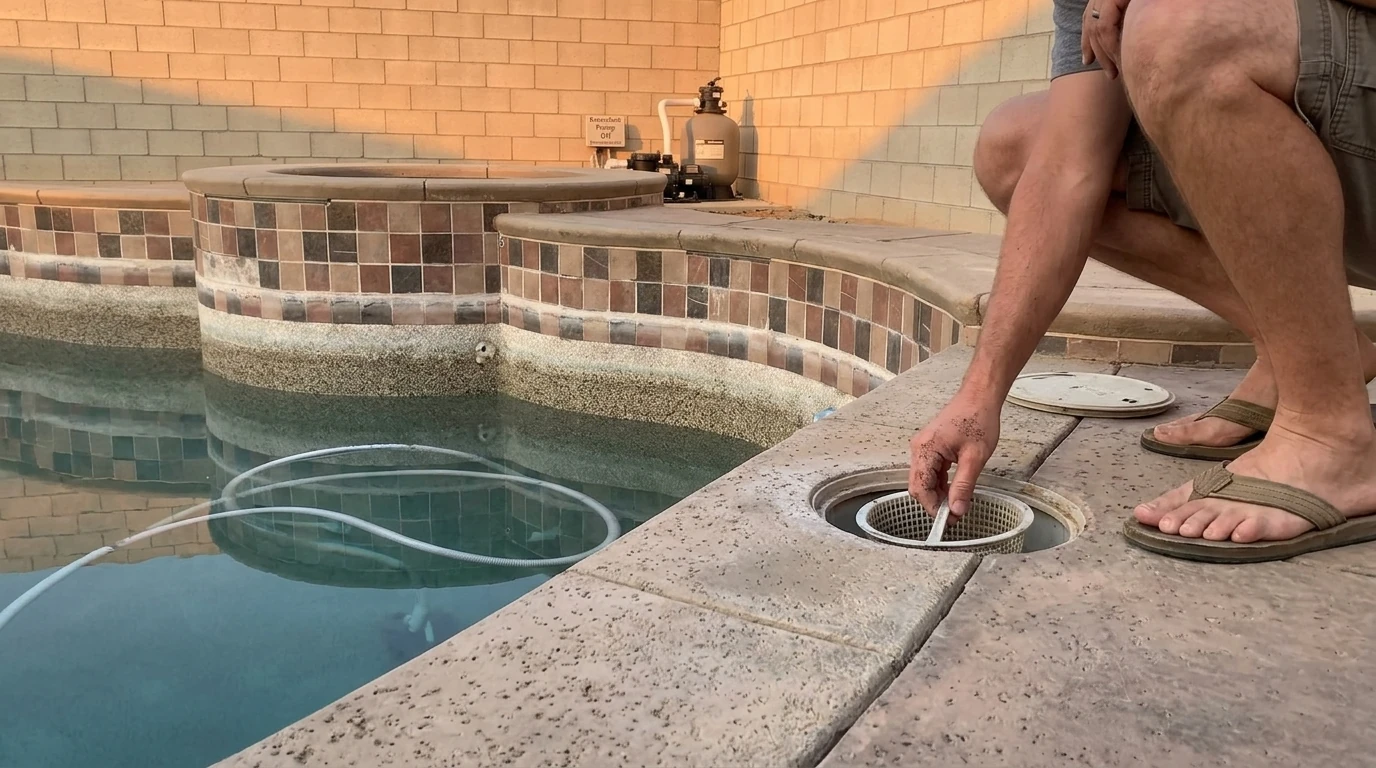
- Cracks at the bottom of the skimmer, the single most common spot we find
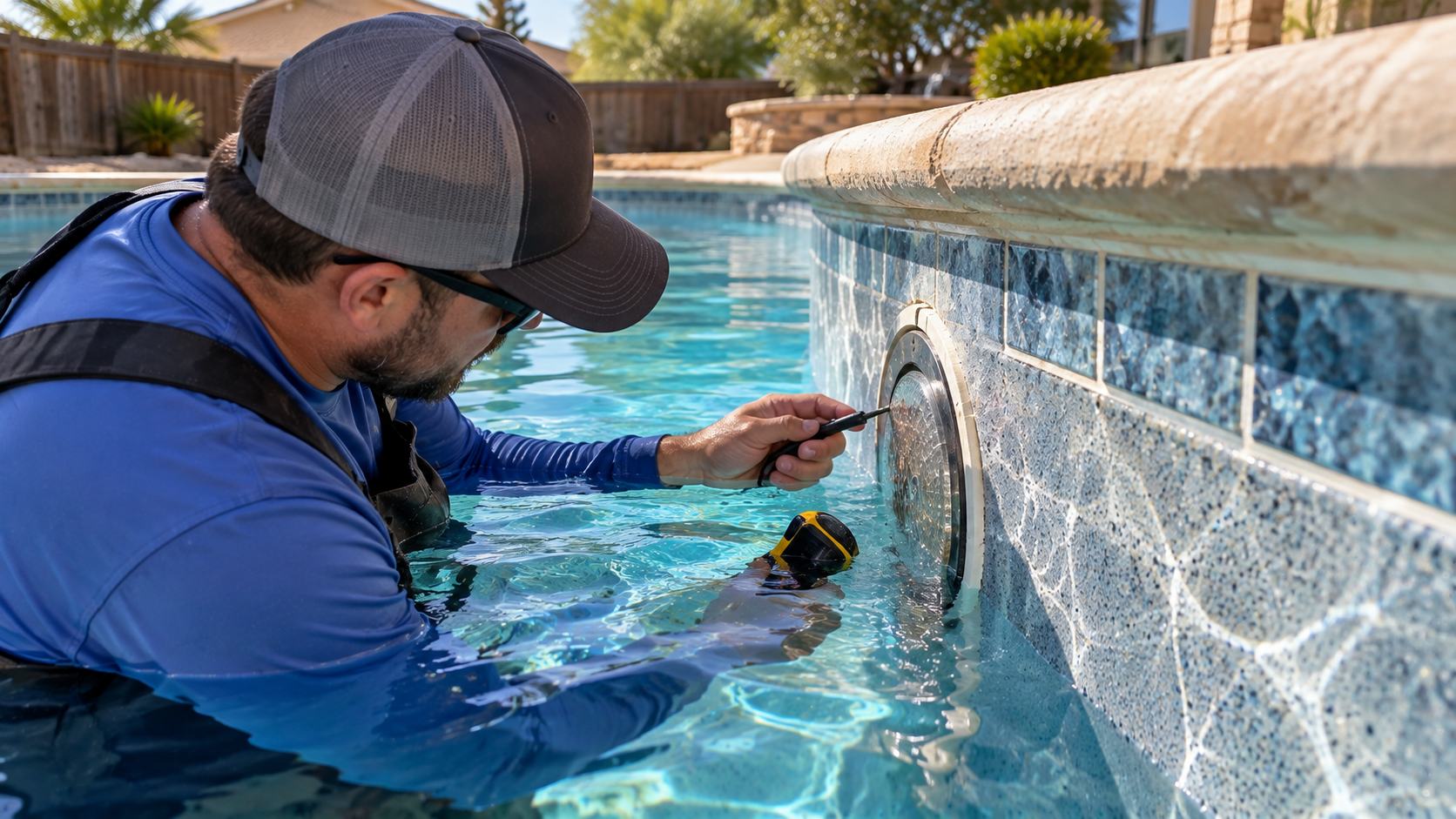
- Loose or aging fittings on the side of the pool, like returns and lights, which can begin to leak long before anything looks wrong
- A faulty autofill valve that hides the loss by quietly topping off
- Trouble near the main drain at the bottom of the pool, which is hard to inspect without gear
One more cost most people miss: a hidden drip dilutes your pool chemicals, so you spend more there too.
Try a Dye Test Around the Skimmer and Lights
Want to narrow it down before calling anyone? A dye test can help when the water is still. Turn the pump off, then release a little dye near a suspect spot. If the dye gets pulled toward a crack or fitting, there is a leak in that area.
Work slowly and keep your hand steady, since ripples scatter the dye. This works best around the skimmer, lights, steps, and visible cracks. It cannot reach what you cannot see, though. Underground pipes need professional tools.
Cracks in the Pool Structure and Vinyl Liner Leaks
Sometimes the issue is the shell itself. A crack in the pool wall or floor can cause significant water loss, and it tends to get worse, not better. In a vinyl liner pool, even a pinhole tear can drop the level by inches in a single night. Vinyl liner repairs and gunite cracks call for very different fixes, which is another reason a correct diagnosis matters.
Raytek permanently repairs structural cracks with Torque Lock staples, replaces failed skimmers, and fixes underground lines with trenchless pipe repair. No tearing up your deck or yard.
Think Your Pool Might Be Leaking? Get Pool Leak Detection in Bakersfield
If the bucket test confirms excessive water loss, do not wait. A sudden loss of water can wash out the soil that supports your deck and shell. The longer it runs, the bigger the repair.
Raytek offers professional leak detection services across Bakersfield and nearby Kern County towns. A licensed pool technician (Lic #1038868), certified by LeakTronics, performs a full leak inspection with underwater microphones, dye, and video scopes to locate a leak even under concrete or turf. Most jobs pinpoint the location of the leak in about 2 to 3 hours. Once the leak is located, we put a clear repair plan in writing on the spot.
Here is what that looks like for your neighbors. Luke Shelby, a recent Raytek customer, shared this:
Pool Care Tips for Bakersfield Pool Owners
A little routine pool care helps you catch trouble early and keeps water where it belongs:
- Check your pool water level weekly and mark it on the tile.
- Use a pool cover during windy stretches. When you cover your pool, evaporation slows way down.
- Glance under the lid of the skimmer each month for hairline cracks.
- Listen for the pump losing prime, a classic early warning.
Stop Pool Water Loss for Good
Pool owners should never have to guess where their water went. Whether the level drops overnight, while the pump is running, or around the clock, Raytek will find the leak and fix it right the first time.
Call Raytek at 888-318-LEAK for a free estimate. We proudly serve Bakersfield, Delano, McFarland, Arvin, Lamont, Wasco, Shafter, and the surrounding Kern County area.
Raytek Pool Leak Detection & Repair | 13061 Rosedale Hwy Suite G-355, Bakersfield, CA 93314 | www.raytekleakdetect.com