The water in your pool sits an inch lower than it did on Friday. Is that a problem, or just winter playing tricks on you? Pool leak or evaporation is the first question every Bakersfield homeowner should ask before spending a dime. Get it right, and you either relax or catch a leak that needs attention before it gets expensive.
This guide shows you how to settle the question in one day with a bucket and some tape.
All Pools Lose Water: How Much Is Normal Evaporation?
First, do not panic. Evaporation is a natural process, and all pools naturally lose water to evaporation. Warmth at the surface turns water into vapor, and dry air carries it away. The bigger the gap between the water and the air above it, the more the water in your pool shrinks. That is why winter is sneakier than most people expect.
So what counts as normal? A typical outdoor pool drops about a quarter inch of water per day due to evaporation. If your pool seems to be losing more water than usual, far past a quarter-inch of water each day, something else is going on. You may have a leak.
How Much Water Evaporates From a Pool in Bakersfield?
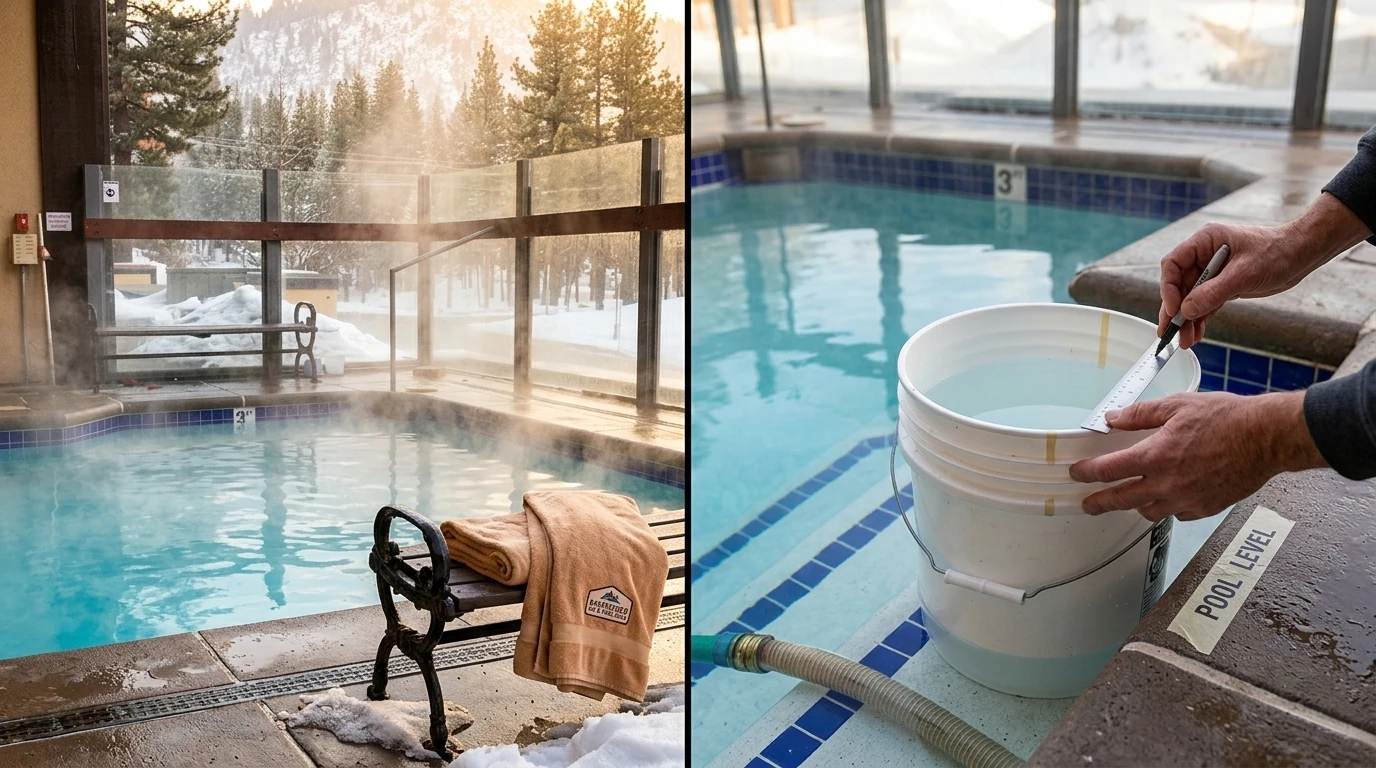
Here is the local catch. How fast your pool gives up vapor depends on where it sits, and winter does not give Bakersfield a break. Think the loss stops when the weather cools? The opposite can happen over heated water. Cold, dry air accelerates evaporation whenever it moves across warmer water. That steam you see rising on a frosty morning is your water leaving.
On a cold, windy night, an uncovered heated pool can lose closer to half an inch. That adds up to thousands of gallons of water over a single winter. The Sierra slopes above Kern County collect snow, while our valley gets frosty nights and tule fog. Expect much more evaporation on clear, dry nights. Then evaporation slows when the fog rolls in and the air is already damp.
What Drives Your Pool Evaporation Rate
So what makes a pool evaporate faster? Evaporation depends on a handful of factors. The temperature of the water tops the list. The warmer the water compared to the night air, the faster the rate of evaporation. That is why heated pools steam on cold winter mornings.
Other things that increase evaporation:
- Wind. Moving air sweeps vapor away and speeds up the evaporation process.
- Low humidity. Dry air drinks up moisture, and Bakersfield has plenty of dry air.
- Sun exposure. Direct sunlight heats the surface where the process of evaporation happens.
- Water features. A waterfall or fountain throws extra water into the air. So a water feature raises the amount of water you lose, and it can also hide real trouble. More on that below.
The Bucket Test: Evaporation or a Leak?
The bucket test is the classic way pool owners separate everyday pool water evaporation from trouble, and it costs nothing:
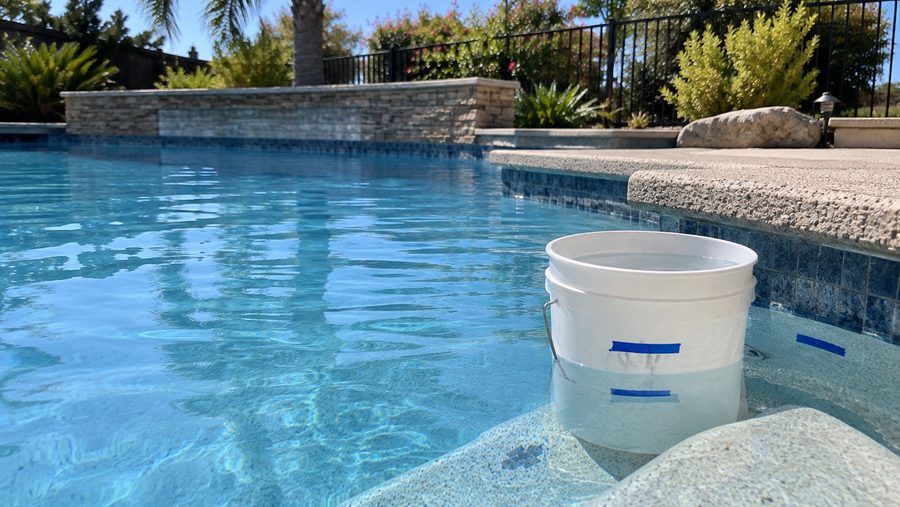
- Set a clean bucket on the top pool step. Fill it with water until it roughly matches the pool around it.
- Use tape or a marker to mark the water level inside the bucket and the pool water level on the outside.
- Shut off the pump, the autofill, and any waterfalls for 24 hours.
- Compare the marks the next day.
Both lose to the dry air at the same rate. So if the two marks dropped evenly, your pool is fine. But if the pool loses more water than the bucket, evaporation isn’t your problem. Your pool is losing water due to a leak that needs fixing.
Swimming Pool Water Loss the Weather Cannot Explain
If your pool loses water faster than the weather can explain, your pool has a leak. Watch for swimming pool water loss paired with any of these:
- The water level dropping fast right after you top off
- Cracks in the pool structure or loose tiles that allow water to slip behind the shell
- Soggy flower beds or grass where water escapes underground, even days after the last winter rain
- Dripping waterfalls or spillways, since a pool and spa combo often shares plumbing
- Chemical and fill costs that creep up month after month
That last one stings. Even a small leak wastes a huge amount of water over time, and you pay for every gallon twice, once on the bill and again in chemicals.
More Ways to Check for Pool Trouble at Home
If the bucket test says you likely have a leak, you can narrow it down a little further. Watch the level for a few days with the pump off, then a few days with it on. Faster loss with the pump running points to pressure side plumbing. Faster loss with it off points to the suction lines. Steady loss either way usually means the shell, a fitting, or a light. These checks tell you the pool is leaking, but not where.
A few drops of dye released near a still crack can confirm a spot you can see. Beyond that, finding the exact source takes pro gear.
How to Keep Your Pool From Losing Too Much Water
You cannot stop nature, but you can slow it down with simple pool maintenance habits:
- A pool cover is the big one, above all over heated water in cold months. A cover can reduce evaporation dramatically by sealing off the surface.
- Run waterfalls and fountains only when you are outside enjoying them.
- Keep water temperature modest if you heat your pool or spa through the winter.
- Mark the line on the tile each week so you spot changes early.
Professional Pool Leak Detection in Bakersfield
Your regular pool service company keeps the water clean. But most pool companies do not carry the right gear for this job, and it is all Raytek does. We are licensed (Lic #1038868) and LeakTronics certified. We use listening gear, dye, and video scopes to find a leak without tearing anything apart. Need us to find a pool leak under concrete or behind a waterfall? Most visits pinpoint it in 2 to 3 hours. Repairs like Torque Lock crack staples, skimmer replacement, and trenchless pipe lining can often start right away.
Dawn Collins, a Raytek customer, had exactly the kind of sneaky problem the weather gets blamed for:
Is It a Pool Leak or Evaporation? Let Raytek Settle It
If your pool may have a leak, do not keep paying to refill it while you wonder. One visit gives you a clear answer about your pool’s water level and a written report of what we find. Catch it this winter and your pool is ready for spring.
Call Raytek at 888-318-LEAK for a free estimate on pool and spa detection services. We proudly serve Bakersfield, Delano, McFarland, Arvin, Lamont, Wasco, Shafter, and the surrounding areas.
Raytek Pool Leak Detection & Repair | 13061 Rosedale Hwy Suite G-355, Bakersfield, CA 93314 | www.raytekleakdetect.com